


Women's Viking









Women's Viking Rings, Pendants & Earrings
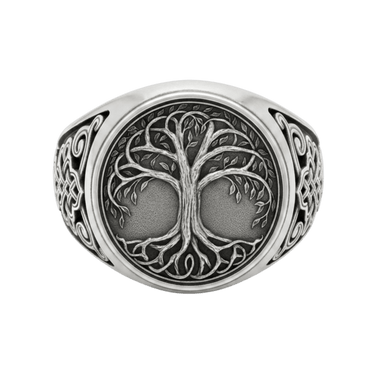
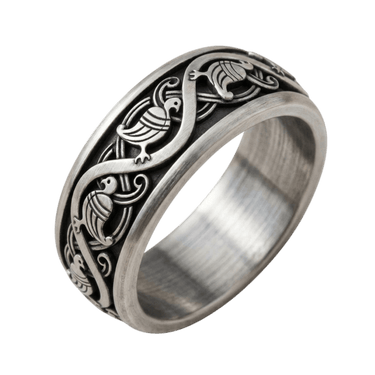
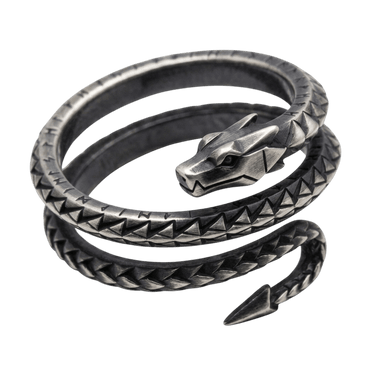
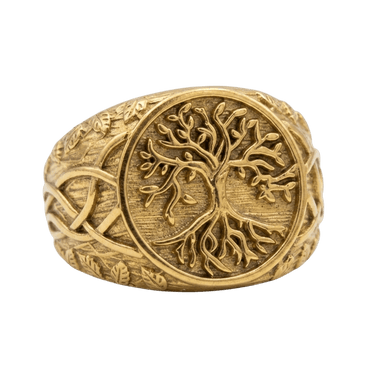
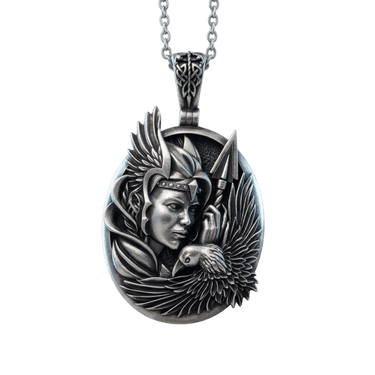
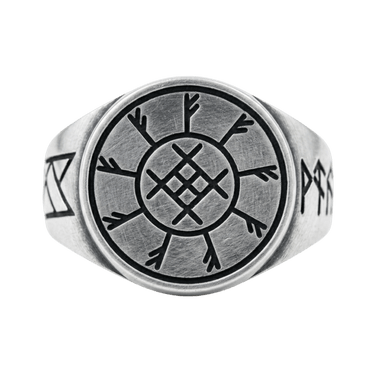
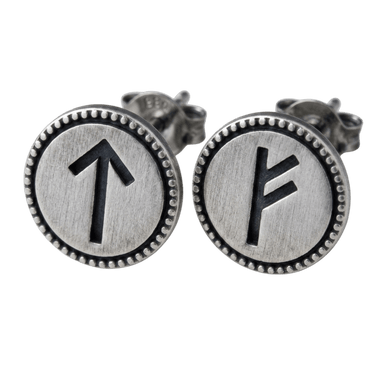
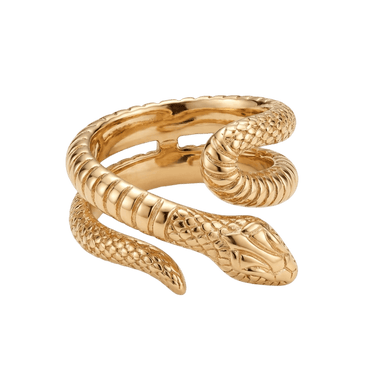
Women's Viking rings, pendants, and earrings bring northern mythology into daily wear through sculpted ravens, hammer amulets, and intertwined beasts. Each piece is cast in 925 sterling silver, finished with oxidized contrast, polished highlights, or warm gold vermeil accents. The forms range from feathered raven wings wrapping the finger to compact Mjolnir medallions balanced for comfortable wear. Sculptural depth defines the entire assembly, allowing intricate mythological contours to remain legible from every angle.
What the Raven, Mjolnir, and Serpent Emblems Mean
In Norse lore, ravens symbolize perception and memory, directly reflecting the twin messengers Huginn and Muninn who watched over the world. The Mjolnir amulet serves as an emblem of protective strength and consecration, honoring Thor across ancient Scandinavian life. Coiled serpents such as Jörmungandr convey the cyclical nature of endurance and natural power through unbroken loops. Interlocking Norse knotwork creates endless lines that reflect unity, personal resilience, and the woven strands of fate recognized throughout northern Europe.
Selecting Between Norse Rings, Pendants, and Earrings
A raven ring provides tactile detail with layered feathers following the contour of the hand, ideal for prominent everyday styling. Viking pendants balance central motifs like Mjolnir or intertwined serpent coils on the chest, making them versatile layers over wool sweaters or linen tunics. For understated accents, compact drop earrings and studs present knotwork seals that frame the face without excess weight. Those who appreciate northern metalwork traditions often pair these items with pieces from our Women's Celtic series or the broader Women's Ancient Worlds selection.
Casting Norse Details in Silver and Vermeil
Every design begins with precise lost-wax casting in 925 sterling silver to preserve fine feather textures and narrow runic bands. An oxidizing bath is applied to deepen the recessed crevices beneath hammer faces and tangled knotwork. Polishing brightens the raised edges, creating sharp dimensional contrast that makes every mythological relief instantly readable. Pieces are also prepared in gold vermeil over sterling silver, with solid 10K, 14K, or 18K gold cast upon request.
Gifting Viking Emblems for Milestones and Heritage
Viking jewelry carries distinctive weight for birthdays, graduation achievements, and personal milestones marked by fortitude. A raven pendant offers thoughtful meaning for someone embarking on study, creative research, or travel where keen insight is prized. Knotwork rings and Mjolnir designs suit recipients celebrating ancestral roots or personal tenacity through life changes. Presenting a sculpted silver amulet honors both historical appreciation and the quiet inner strength of the wearer.
