


Men's Nurse & Medical








Men's Nurse & Medical Necklaces & Rings
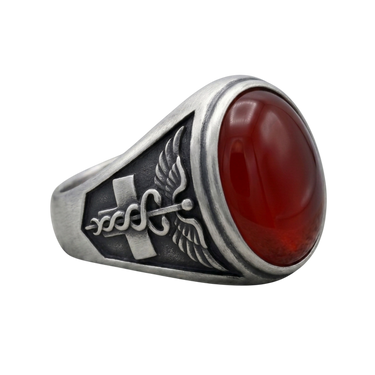
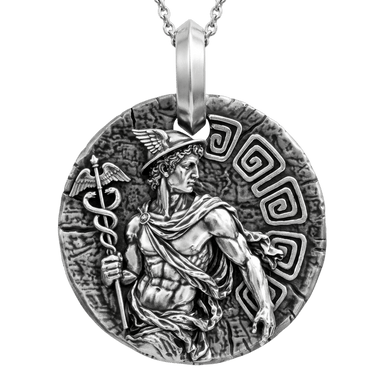
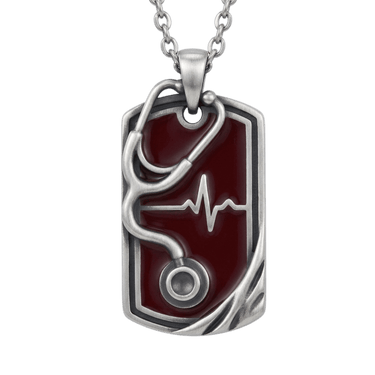
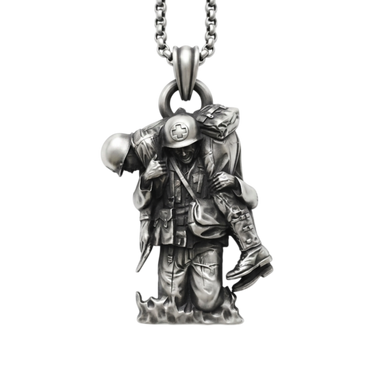
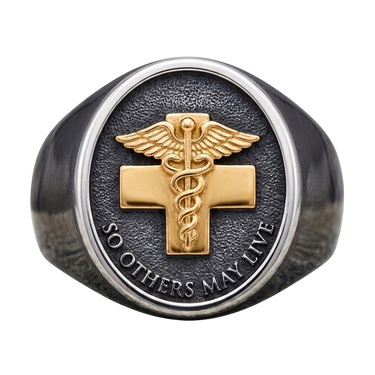
Sarnion crafts men's nurse and medical jewelry for healthcare workers, first responders, and history enthusiasts. This focused selection includes pendants and signet rings centered on healthcare iconography, such as the double-snake caduceus, the rod of Asclepius, military combat medic insignia, and historical plague doctor masks. Each piece is cast in 925 sterling silver and offered in oxidized silver, polished silver, or solid 14K gold on request.
Symbolism of the Caduceus, Asclepius, and Plague Doctor
The Rod of Asclepius features a single serpent entwined around a staff, representing healing, renewal, and the traditional practice of medicine from ancient Greece. The Caduceus displays two serpents climbing a winged staff, an emblem associated with Hermes that modern institutions frequently adopt for administrative and field medicine. Military combat medic designs mark the courage of field rescuers who provide emergency treatment under fire. The beaked plague doctor mask recalls medieval quarantine physicians and serves as an enduring memento mori symbol.
Selecting a Medical Ring or Pendant
A medical pendant rests close to the chest beneath scrubs or a uniform, making it practical for clinical shifts where hand jewelry is restricted. Signet rings bearing the plague doctor mask or biomechanical skull appeal to those drawn to dark academia and medical history outside clinical settings. Clinicians who prefer traditional iconography often choose the rod of Asclepius medallion for daily wear. To explore related vocations and themed motifs, visit Men's Professions or browse the wider Men's Passions collection.
Casting Medical Icons in Sterling Silver
Each design begins as a detailed wax model before being cast in 925 sterling silver. Artisans apply an oxidized finish to darken the deep recesses, which highlights the individual scales of the serpent, the feathered wings, and the contour of the doctor's beak. Raised ridges are polished to create sharp visual contrast across the metal. Every item can also be produced in gold vermeil or solid 18K gold upon special request.
Meaningful Milestones for Nurses and Medics
Medical jewelry marks pivotal transitions in a clinician's career. A caduceus or Asclepius pendant makes a lasting token for nursing school pinning ceremonies, medical board certifications, and residency graduations. Combat medic emblems recognize active-duty corpsmen and veterans who served on frontline rescue teams. History scholars and oddities collectors appreciate the grim heritage behind the plague doctor ring for birthdays or milestone achievements.
