


Men's Amethyst






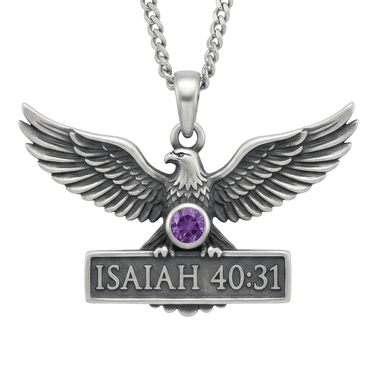
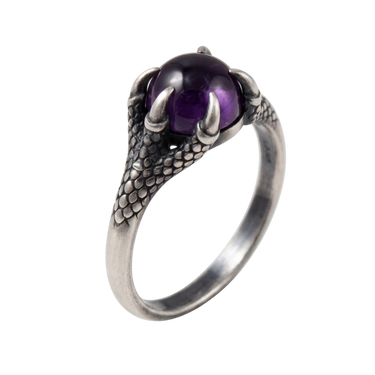


Men's Amethyst Pendant Necklaces & Rings
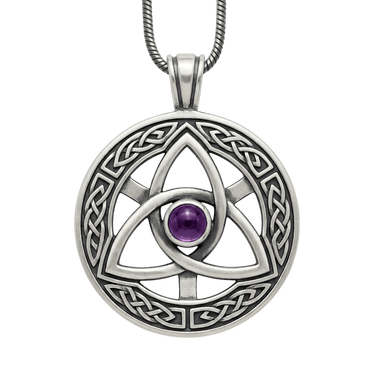
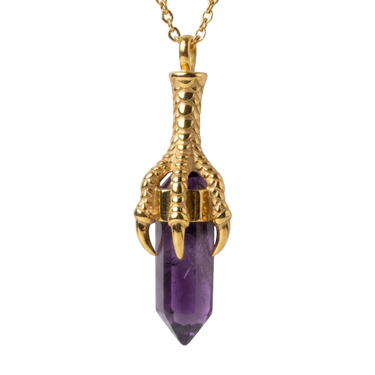
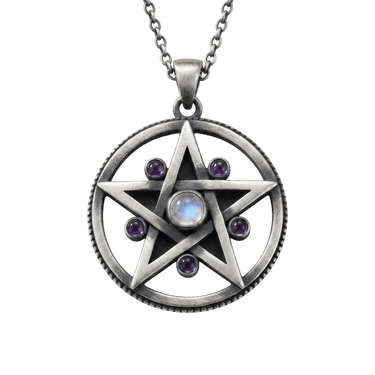
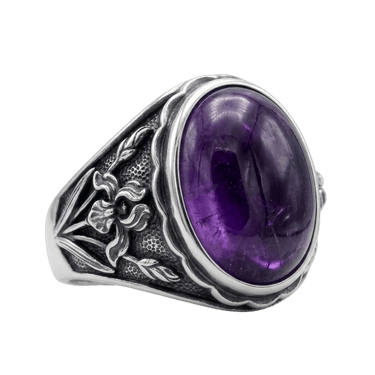
Men's amethyst pendants and rings bring together rich violet quartz with detailed mythological and geometric emblems. Our compact collection centers on distinct forms, including coiled dragon bands, Celtic triquetra medallions, nocturnal moth figures, and minimalist birthstone solitaires. Every design is sculpted in 925 sterling silver, presented in an oxidized silver, polished silver, or rose gold plated finish. These focused pieces offer defined silhouettes that highlight the contrast between cool silver metalwork and saturated purple gemstone accents.
The symbolism of dragons, the triquetra, and violet quartz
Amethyst has been prized since antiquity as a stone associated with clear thought, sobriety, and composure. The coiled dragon emblem represents strength, vigilance, and untamed natural guardianship in traditional folklore. With three interlocking arcs, the Celtic triquetra serves as an ancient emblem of unity, eternity, and the three realms of earth, sea, and sky. The moth motif reflects nocturnal guidance, intuition, and transformation as it navigates toward light. Each symbol pairs with the mineral's deep purple hues to convey endurance and inner resolve.
Choosing between an amethyst ring and a pendant necklace
Selecting the right piece depends on the scale and style you prefer to wear. A dragon ring delivers an assertive profile on the hand, suiting those drawn to fantasy lore or pronounced sculptural detail. In contrast, a triquetra or solitary birthstone pendant rests comfortably against the chest for understated, daily wear. Those seeking darker or opaque minerals can examine Men's Onyx or Men's Garnet, while those commemorating specific calendar months often explore Men's Birthstone designs. A solitaire drop complements clean tailoring, whereas figural pendants pair naturally with casual collars.
Casting sterling silver settings for deep purple gemstones
Creating settings for natural stones requires precise casting in 925 sterling silver. Recessed dragon scales and knotwork grooves receive dark oxidation so the raised silver relief reads clearly from a distance. Smooth prong and bezel mounts keep cabochons and faceted pear-cut stones securely in place without obstructing light. Pieces are also offered in solid 14K gold on request.
Marking February milestones and personal heritage
An amethyst piece serves as an authentic gift for men celebrating February birthdays, honoring the month's designated birth gem. Celtic triquetra necklaces resonate with recipients honoring ancestral roots, while dragon designs mark personal achievements in martial arts, gaming, or literature. Given the durable silver mounting and classic stone shapes, these pieces mark graduations, promotions, and meaningful personal transitions without requiring ornate styling.
